





Free written scope consultation - allowances, timeline, and change-order rules on paper before a single trade is scheduled
Plant Prefab Roofing: The Woodland Hills Owner’s Guide
We stock and install Plant Prefab-compatible roofing parts across Woodland Hills, with most replacements running $400 to $1,800 for repairs and $8,000 to $20,000 for full roof replacement on a Plant Prefab structure. When a Plant Prefab roof component fails, you usually notice it the same way: a water stain on the ceiling after the first heavy rain in the Santa Monica Mountains foothills, or a visible seam separation where two prefabricated roof panels meet. The modular design of Plant Prefab homes means the roof isn’t stick-built like a traditional Woodland Hills tract home. It’s a panelized system, and that changes how you diagnose a failure, what parts you need, and who should touch it.
Plant Prefab builds roof assemblies off-site, then trucks them to the lot and sets them with a crane. That manufacturing approach gives you a tighter envelope off the line, but it also means the weak points aren’t the same as a conventional house. On a traditional roof in the West Valley, we usually see shingle wear and flashing failures. On a Plant Prefab roof, we’re more likely to see seam gaskets aging out in direct sun, panel joint tape failing at eave edges, or the factory-applied membrane pulling away where the parapet meets the roof deck. We’ve worked on Plant Prefab structures throughout Warner Center, Walnut Acres, and the hillside lots above Topanga Canyon Boulevard, and the failure pattern is consistent: the panel itself is almost never the problem. The connection points are.
Which Plant Prefab Models This Applies To

Plant Prefab has produced several roof configurations over the years, and the compatibility question is the first thing we sort out on any Woodland Hills job. Their earlier generation roofs used a factory-applied standing seam metal profile over a plywood substrate, while newer builds moved toward a membrane roof over an insulated panel core. If you have the original build documentation, there’s usually a spec sheet that identifies the roofing system by manufacturer and panel series. If you don’t, we can identify it by measuring the seam spacing, checking the fastener pattern, and pulling a sample of the membrane for composition.
Here’s the compatibility gotcha most owners hit: the aftermarket panel manufacturers that make Plant Prefab-compatible replacement sections don’t all match the original tolerances. We’ve seen a quarter-inch difference in panel thickness cause a visible ridge line at the replacement seam, which becomes a leak point years earlier than it should. That’s why we always spec the replacement panel to the measured thickness of the existing assembly, not the nominal size in the original spec sheet. For membrane roofs, the decision is different: we typically use a high-grade TPO or modified bitumen membrane that outperforms the original in California UV exposure. The sun here doesn’t age roof membranes the same way it does in, say, the Pacific Northwest. In Woodland Hills, you’re looking at 280 to 300 days of direct sun per year, and that ultraviolet load is what eventually breaks down the factory membrane, especially on south-facing roof slopes.
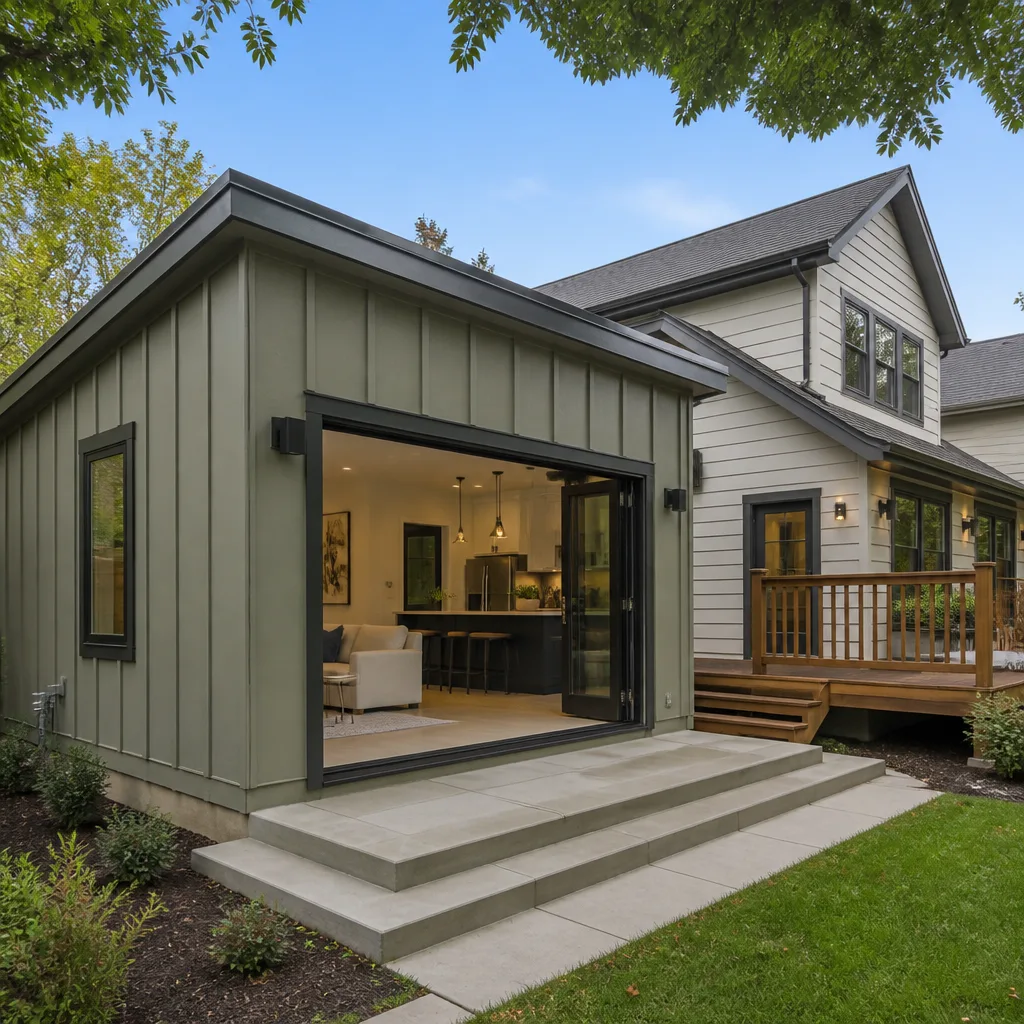
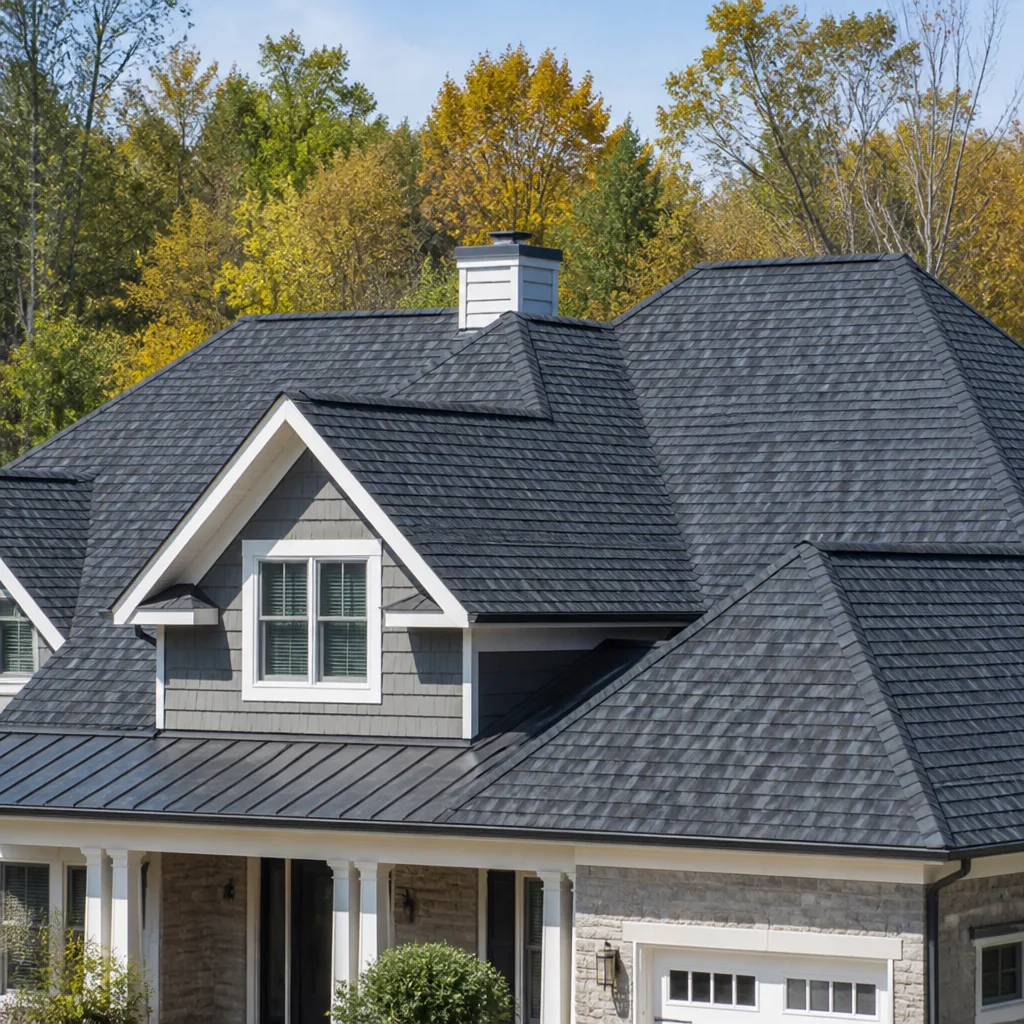
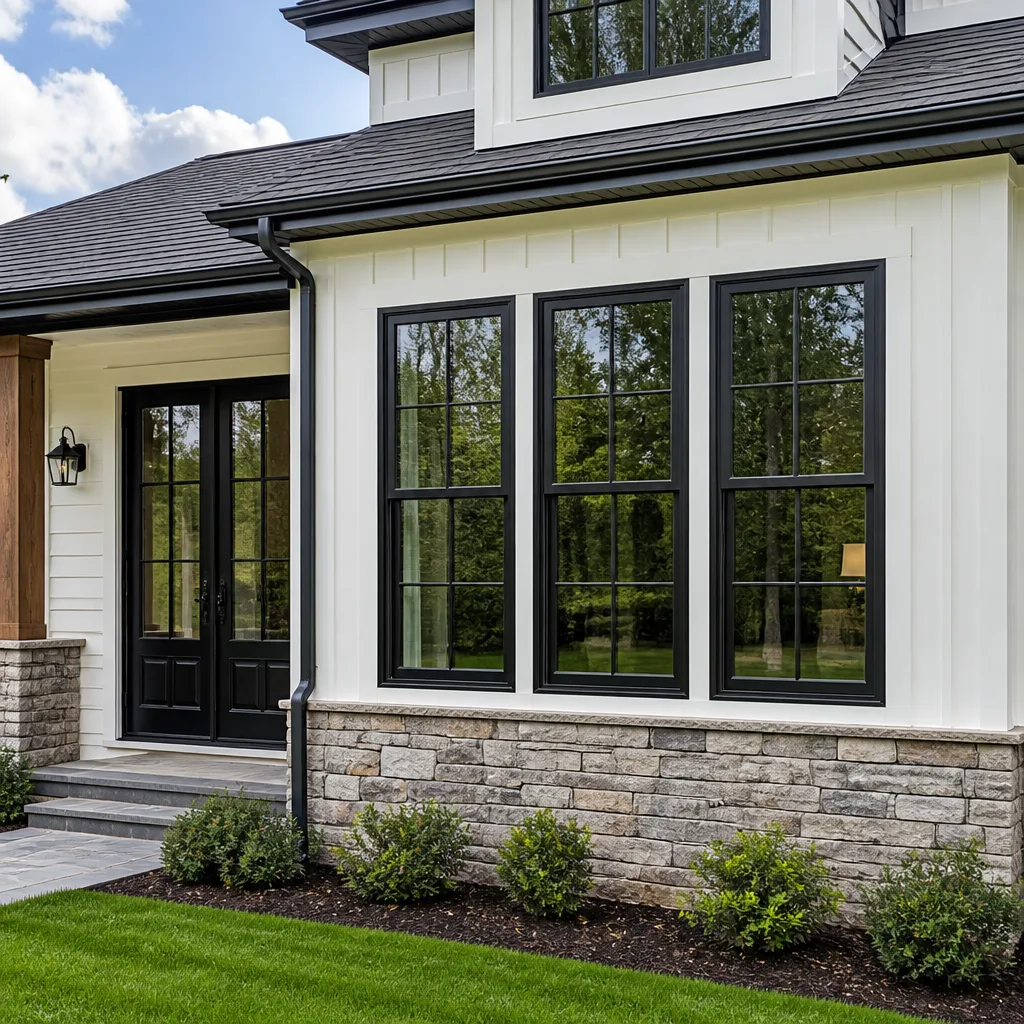
Styles & brands we work with
Signs Your Plant Prefab Roofing Is Failing
- Water staining on the ceiling at panel seams. This is the most common first symptom we see in Woodland Hills. The leak usually follows the seam line between two prefabricated panels, and it points to a failed seam gasket or compromised joint tape rather than a hole in the panel itself.
- Visible seam separation or gapping between roof panels. Thermal cycling in the Valley, where we get 40-degree temperature swings between day and night for much of the year, causes panel edges to expand and contract. Over a decade or more, the factory seam sealant can lose adhesion and start pulling away.
- Bubbling or blistering in the membrane surface. This is trapped moisture inside the membrane layers, usually at a point where a lap seal failed and water wicked in. On a flat or low-slope Plant Prefab roof, one failed lap can feed water across an entire panel section.
- Rust staining or corrosion at metal edge flashing. The original flashing on some Plant Prefab models was a lighter-gauge metal than what we install now. After years of coastal air influence and rain, the flashing at eave edges and scuppers fails before the rest of the roof.
- Daylight visible through the soffit or fascia gap. If you can see light from inside the attic at the roof edge, the panel has shifted or the fascia has pulled away. That’s a structural connection issue, not just a roofing surface issue, and it needs to be addressed before the next heavy rain.
See the difference
 Before
 After
After Before
 After
After Before
 After
AfterReplacement Cost & What’s Included

For a targeted Plant Prefab roof repair in Woodland Hills, you’re looking at $400 to $1,800 depending on the component. A single seam repair with new gasket material and resealing typically runs $500 to $900. Replacing a section of failed membrane runs $800 to $1,600 depending on square footage. If you’ve got standing seam metal panels and a panel is damaged, a single panel replacement usually lands between $700 and $1,500 including seam reintegration. Full roof replacement on a Plant Prefab home runs $8,000 to $20,000, driven by roof square footage, the membrane or metal system chosen, and whether the underlying insulation panels need to be replaced or can be salvaged.
Every quote we write in Woodland Hills includes the parts, the labor, the disposal of the old material, and a written warranty on the work. We don’t do change orders on an open-ended scope. The price you approve before we start is the price on the invoice when we finish. That’s the Relay Standard, and it applies to every Plant Prefab roof job we take.
DIY or Call Us?
There’s a level of roof inspection any owner can do safely: look for water stains on the ceiling, check the attic after a rain, and take photos of any visible seam separation or membrane bubbling from the ground or a ladder placed on stable footing. What you shouldn’t do is get onto a Plant Prefab roof and start pulling seam tape or opening a membrane lap. Roof work on any structure carries fall risk, and on a panelized roof, walking on the wrong point or disturbing a seam that’s still holding can turn a $600 repair into a $2,500 replacement. Luca Romano has been doing roof and structural work in this trade for nearly two decades, and even with that experience, we treat every Plant Prefab roof as a system, not a surface. If you’re seeing symptoms, call us at (341) 217-2776 and we’ll do a proper inspection before anything gets opened up.
FAQs

In this climate, a Plant Prefab membrane roof typically lasts 15 to 20 years before the factory-applied components start showing real UV degradation, while standing seam metal can go 30 to 40 years if the seam gaskets are maintained. The panels themselves outlast the connection materials, which is why most failures we see are at seams, laps, and flashings rather than in the panel field. Call (341) 217-2776 to have us assess where your particular roof is in its life cycle.
Yes, in most cases a failed seam, gasket, or lap can be opened, cleaned, and resealed without replacing the panel itself. The exception is when moisture has wicked into the insulation core, at which point the affected section should be cut out and rebuilt with new panel material. We’ll tell you which situation you have after we open the affected area and see what the core looks like.
A single seam or lap repair on a Plant Prefab roof in Woodland Hills is usually a one-day job, starting with removing the old sealant, prepping the surfaces, and applying new gasket material with the proper primer. A panel section replacement can run two to three days depending on the panel size and whether we need to order material to match your existing assembly.
We keep the most common failure materials on the truck: seam gaskets, lap sealant, joint tape, panel fasteners, and edge flashing in the gauges we see most often in Woodland Hills. If your job needs a full replacement panel, we place the order directly with the manufacturer and schedule the install once the panel arrives and we’ve confirmed the thickness match. Estimates are free, and that’s a good way to find out whether your roof is a truck-stock repair or an order-in replacement.
Written by Luca Romano, Owner, Sawyer Remodel Woodland Hills at Sawyer Remodel Woodland Hills, serving Woodland Hills and nearby areas.