Last updated October 16, 2026







Free written scope consultation - allowances, timeline, and change-order rules on paper before a single trade is scheduled
DIY vs Professional Construction: The Woodland Hills Homeowner’s Decision Guide
Every year, homeowners in Woodland Hills lose real money on a simple misread: they think the DIY-versus-hire question is about skill, when it’s actually about paperwork, liability, and what happens when the house gets sold. You can legally tile a bathroom floor in this city with no license and no permit. You cannot legally touch your own electrical panel without an owner-builder permit, and if that unpermitted work fails later, your insurance company has a documented reason to deny the claim. This guide walks you through the actual line between what you can safely and legally do yourself, what you should pay a contractor to handle, and how California’s rules shift the math in ways most tutorials on hiring a Woodland Hills contractor skip. By the end, you’ll know exactly which projects to self-perform, which ones to farm out, and what it costs when the guess goes wrong in Woodland Hills.
Quick Answer
DIY makes sense in Woodland Hills when the work is cosmetic, non-structural, non-permitted, and stops short of any trade covered by California contractor licensing law: painting, flooring, trim, demo, basic fixture swaps. Hiring a professional is the right call when the project touches structure, electrical, plumbing, gas lines, or anything that requires a permit and a paper trail for resale. The real decision factor isn’t your skill level. It’s what happens to your homeowner’s insurance policy and your resale disclosure if the work fails. That’s where DIY gets expensive.
Styles & brands we work with


Table of Contents
- California’s Owner-Builder Permit Rules: What You Can Legally Do in Woodland Hills
- The Real Cost of DIY: Tools, Waste, and the Fix-It Fee
- Highest-Failure DIY Projects in Woodland Hills Homes
- Insurance Implications: When Your Policy Walks Away
- The Project Decision Matrix: Demo to Gas Line
- Permit Reality in Woodland Hills: What the City Actually Checks
- Resale Documentation: The Liability That Follows You
- What to Look For When You Do Hire
California’s Owner-Builder Permit Rules: What You Can Legally Do in Woodland Hills
The California Contractors State License Board draws a hard line for residential work. You, as the homeowner, can act as your own general contractor only if two conditions hold: you own and occupy the property as your primary residence, and you do the work yourself or hire licensed subcontractors for each trade. You cannot hire unlicensed workers and call it owner-builder. You cannot invoice a neighbor’s project. And you cannot sell the house within a year of unpermitted owner-builder work without a specific disclosure that names you as the responsible party.
Where does the trade line sit? California law says any project valued over $500 that touches structural framing, electrical wiring, plumbing systems, HVAC, or anything connected to a gas line requires a licensed contractor. Painting, flooring, cabinetry, trim work, and non-structural demo fall outside that line. A homeowner in Woodland Hills can spend a weekend retiling a bathroom backsplash with zero permits and zero legal exposure. That same homeowner cannot legally reroute a sink drain or add an outlet without pulling a permit and doing the work to code.
The owner-builder path is available for larger work too: you can legally pull an owner-builder permit for a whole-home renovation if you live in the house. But here’s what the tutorial doesn’t tell you: the permit makes you the contractor of record, and the city of Los Angeles (which Woodland Hills falls under) treats that seriously. Inspections are scheduled on the same timeline as any professional job. If the work fails inspection, you’re the one redoing it. And when you eventually sell, you sign a disclosure that reads differently than a licensed contractor’s permit history does.
We’ve seen homeowners in the foothills neighborhoods around Mulholland Drive take the owner-builder route for additions and finish strong. We’ve also seen homeowners in the flatlands near Ventura Boulevard lose three months to a bathroom permit they thought would take a week. The rule isn’t “never do it yourself.” It’s “know which paperwork comes with the work.”
The Real Cost of DIY: Tools, Waste, and the Fix-It Fee
Most DIY math starts and ends with materials. A gallon of paint is $45. A box of tile is $3 per square foot. A new vanity is $600. The tutorial makes it look like the project costs exactly that. Then reality lands in the garage.
Here’s the cost breakdown nobody puts in the video description:
- Tool rental and purchase: A wet saw rents for $60 to $90 per day in the Valley. A flooring nailer runs $45 a day. A 6-foot level, a mixer, knee pads, tile spacers, and a grout float add another $120 to $180. You will buy tools for one project that you will never use again.
- Material waste from inexperience: First-timers order 20 to 30 percent more tile than needed because of bad cuts. On a $600 tile order, that’s $120 to $180 in scrap. Pros in Woodland Hills homes typically plan for 10 to 15 percent waste. You pay for the extra because you’re learning on your own dime.
- The fix-it fee: This is the line item nobody budgets for. When a contractor takes over a half-finished or failed DIY job, they don’t just finish the work. They undo it first. Demolishing a bad tile job, re-leveling an out-of-flat floor, or pulling a shower pan that didn’t slope correctly adds 15 to 25 percent to the job cost in Woodland Hills, sometimes more.
A homeowner in Woodland Hills tries a DIY shower pan and saves $1,800 in labor. The pan leaks. The subfloor rots. A contractor now charges $4,200 to rip out the failed pan, replace the subfloor, waterproof properly, and retile. The DIY project didn’t save $1,800. It cost $2,400 more than hiring from the start, plus the wasted weekend.
None of this means you shouldn’t DIY anything. It means the honest math includes the cost of being wrong. If that number scares you, buy the tools and paints. If it doesn’t, hire the pro for the waterproofing and tiling, and send them a thank-you text from the couch.
Highest-Failure DIY Projects in Woodland Hills Homes
Not all projects fail equally. Three types of work show up on our radar in Woodland Hills more often than anywhere else because of local construction realities and climate, and each one reinforces why seasonal construction care matters here.
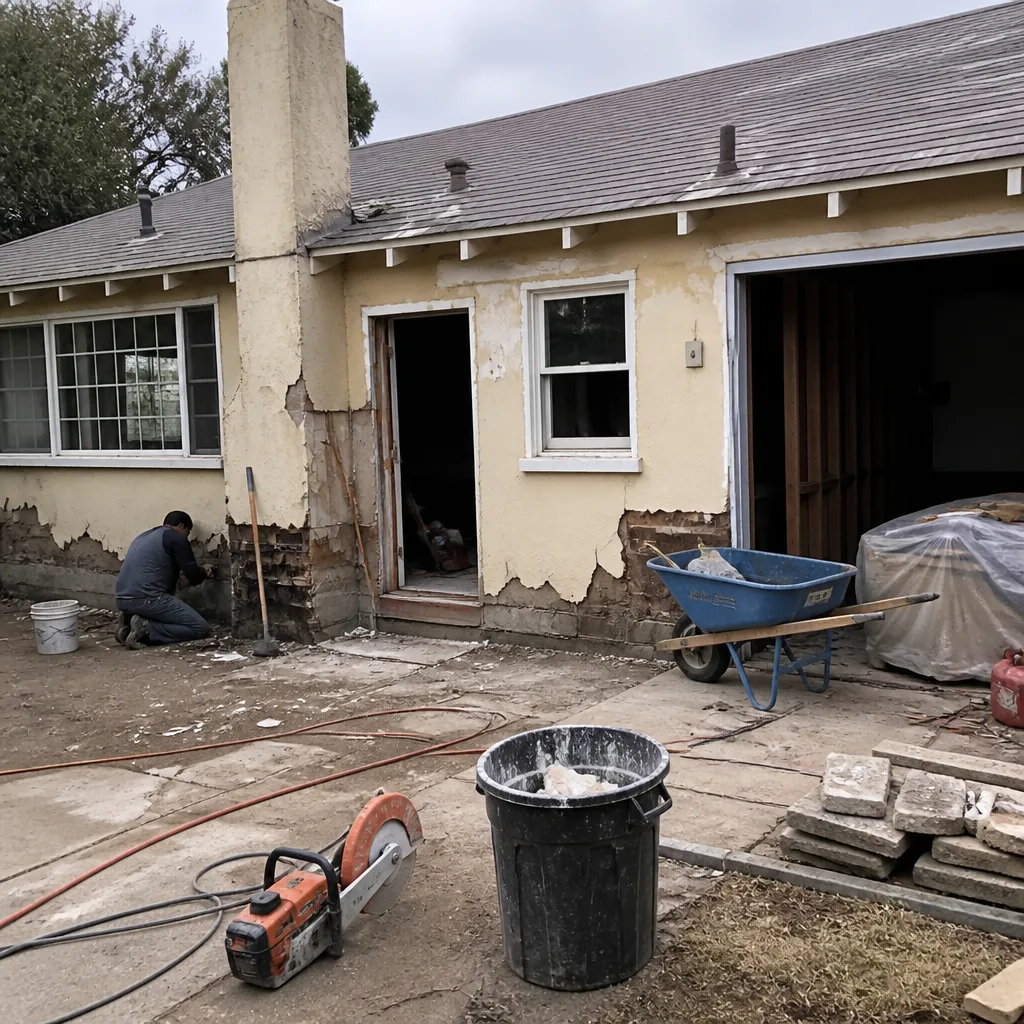
Stucco patching on older homes. Large portions of Woodland Hills housing stock were built between 1950 and 1980 with three-coat stucco exteriors. Patching stucco looks simple. It is not. The color match is brutally difficult because decades of sun fade the original in a way that can’t be reproduced in a box. The patch also has to be wired, scratched, and brown-coated over multiple days, not slapped on in an afternoon. Failed stucco patches don’t just look wrong. They let water behind the wall in a city where the winter rain arrives in concentrated bursts. By the time the crack shows on the inside, the repair bill quadruples.
Deck waterproofing. Woodland Hills gets 90-degree summer days and long dry spells, then sudden winter downpours. That expansion-and-contraction cycle finds every seam in a deck surface. Homeowners patch a small soft spot, then two winters later the joists below are rotted because water found the unflashed edge. DIY deck waterproofing failure is slow, invisible, and destructive. By the time you see the problem from above, the structure below is compromised.
HVAC work on older systems. Many Woodland Hills homes still run on systems installed in the 1990s and early 2000s. Those systems use R-22 refrigerant, which is still legal to service but no longer manufactured. A homeowner buying a recharge kit at the hardware store hits two problems: first, you can’t legally buy R-22 without an EPA certification; second, the system might have a leak that a recharge masks for one season before it dies completely. Amateur HVAC work on an aging system often converts a $400 fix into a $9,000 replacement in Woodland Hills.
Insurance Implications: When Your Policy Walks Away
Here’s the section YouTube skips. Homeowner’s insurance policies in California contain language about unpermitted work and self-performed construction. Read your policy under the exclusions section and you’ll find clauses about “faulty workmanship” and “unpermitted improvements.” What does that mean in practice?
If you do electrical work yourself, don’t pull a permit, and six months later a fire starts in that wiring, the insurance adjuster has grounds to deny the claim. Not because you meant harm. Because the policy excludes damage caused by work that was not performed to code by a licensed professional. The same logic applies to plumbing failures from a DIY bathroom remodel that floods the house, or a structural issue that results from a wall you took out because it “looked non-load-bearing.”
Some policies extend partial coverage for “sudden and accidental” water damage even if the cause was a covered peril. But the moment the cause traces back to work you did without a permit, the company will use that as the denial rationale. Homeowners in Woodland Hills have filed claims exactly like this and lost them. The liability doesn’t stop at the damage. If the fire spreads to a neighbor’s property, their insurance company can come after you personally.
We say this not to scare you off every DIY project. We say it because paint and trim and flooring never trigger this. Plumbing and electrical do. Know which room you’re standing in before you pick up the tool.
The Project Decision Matrix: Demo to Gas Line
Use this as your ruling document. It’s based on California law, Woodland Hills code reality, and the average failure rate we’ve observed across two decades of remodeling work in the area.
- Demo and cosmetic painting: DIY. Rip out the old carpet. Scrape the popcorn ceiling (test for asbestos first on pre-1980 homes). Paint the walls in a weekend. No permit, no license, no insurance exposure.
- Flooring: DIY if floating or glue-down, hire for tile. Luxury vinyl plank is a genuinely forgiving DIY project. Porcelain tile over a concrete slab in a Woodland Hills ranch requires a flat floor, correct thin-set, and proper layout. Get the tile wrong and you redo the whole floor.
- Fixture swaps: DIY for sinks and faucets, hire for anything gas. Swapping a Kohler or Moen faucet is beginner-level plumbing that doesn’t require a permit in most Woodland Hills jurisdictions. Swapping a gas range or water heater is a licensed, permitted job. Do not touch the gas line. Call a professional. A leak is not worth the $300 you’ll save.
- Bathroom remodel without moving plumbing: DIY if you have time, hire if you have a deadline. This is the honest middle ground. A cabinet, countertop, and fixture refresh can absolutely be owner-performed. Schluter edge trim (the metal strip that waterproofs where your tile meets the floor) is not complicated. But a full gut with a new shower pan and waterproofing is where we see the most expensive DIY failures in Woodland Hills homes.
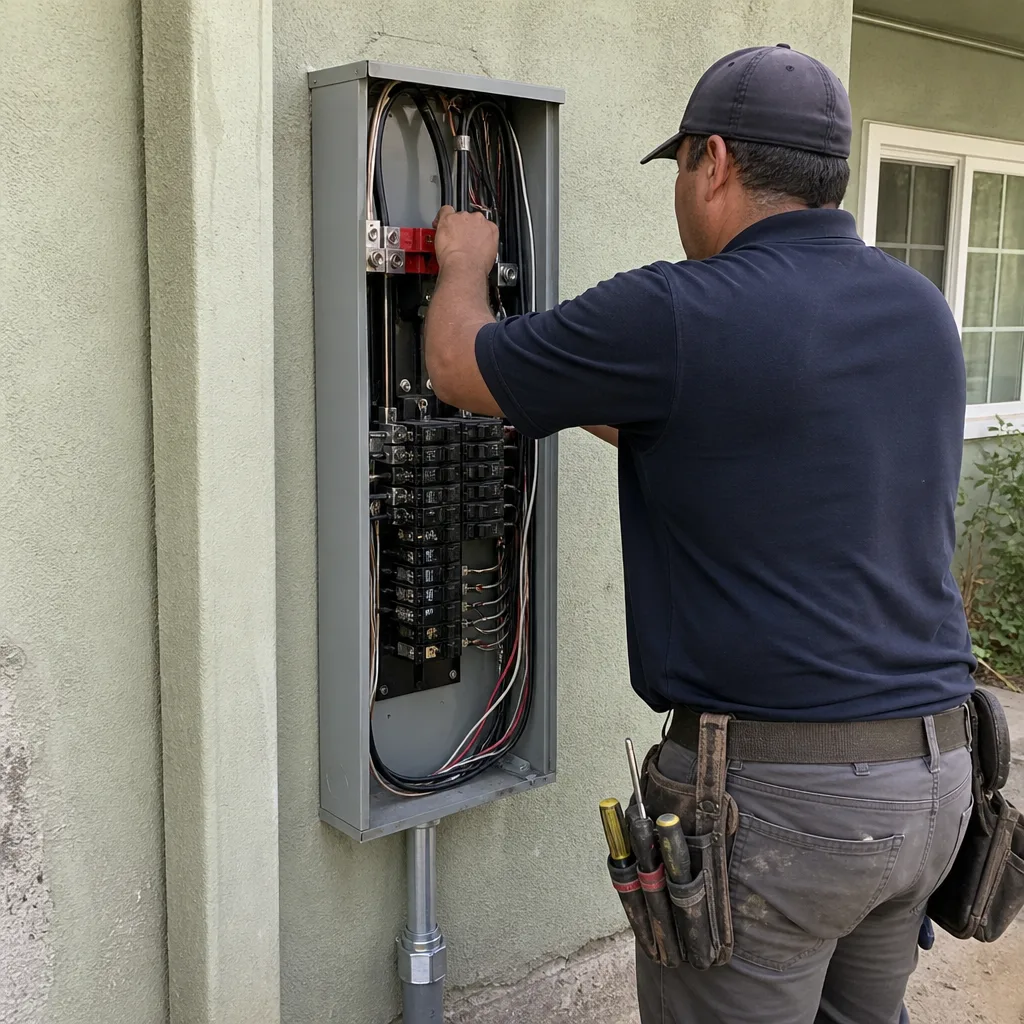
- Electrical: hire, always. California building codes are strict on this. Electrical work is not a gray area. It’s a licensed trade for a reason.
- Structural: hire, always. Taking out a wall, adding a beam, cutting a new window opening, or modifying a roofline. One wrong call turns a cosmetic update into a structural hazard that shows up on an inspection report years later.
- Anything touching gas: hire, always. This one is not negotiable. Gas line work, appliance connections, and anything that vents combustion air out of the house. Licensed professional, permit pulled, inspection passed.
Permit Reality in Woodland Hills: What the City Actually Checks
Woodland Hills falls under the City of Los Angeles Department of Building and Safety. Here’s what that means when a permit gets pulled at your address.
An inspector will physically visit the property at rough-in (when framing, plumbing, and electrical are visible) and at final (when the work is complete). They check that the work matches the approved plans, that it meets current California Building Code, and that all work was done by properly licensed tradespeople. That last part matters. If you’re acting as owner-builder and the inspector sees evidence of unlicensed work, the inspection fails and the project stalls until it’s corrected. In a city where inspector availability can run days to weeks out, a failed inspection costs real calendar time.
Some homeowners ask: “What if I just don’t pull permits?” Here’s what that looks like in Woodland Hills specifically. The city’s enforcement is complaint-driven for the most part. A neighbor near Mulholland Drive reports major construction noise or a dumpster that’s been there for three weeks, and the city investigates. If they find unpermitted work in progress, they issue a stop-work order. The work halts. You then have to either permit it retroactively or remove it. Retroactive permits cost more than original permits because the inspector will require you to open up walls to prove what’s behind them.
And here’s the part that hurts in a neighborhood with homes selling in the seven figures: unpermitted work shows up on the title report when you sell. More on that below.
Resale Documentation: The Liability That Follows You
When you sell a home in Woodland Hills, you sign a Transfer Disclosure Statement. One of the questions asks: “Are you aware of any significant defects or malfunctions in any of the following?” Another asks about room additions, structural modifications, and other alterations made without a permit. You answer truthfully or you expose yourself to a post-sale lawsuit.
A buyer’s home inspection will catch most unpermitted work. Inspectors in Woodland Hills walk these homes with thermal imaging cameras and moisture meters. They spot the outlet that was added without a permit because the wiring doesn’t match the house’s era. They spot the bathroom remodel that wasn’t permitted because the shower pan doesn’t have the code-required waterproofing detail. When the inspection report flags it, the buyer asks for the permit history. If there’s no permit, one of three things happens: the buyer demands a price reduction, the buyer demands you fix it before closing, or the deal dies.
Unpermitted work also lives in the county record. When the square footage on the county assessor’s record doesn’t match the square footage of the house on the listing, buyer’s agents in Woodland Hills smell it immediately. A converted garage without permits. A bathroom addition. A finished basement. The buyer’s lender may refuse to finance the property over the discrepancy, which kills deals faster than anything in the inspection report.
The counterargument is: people sell houses with unpermitted work all the time. They do. And they negotiate the price down to do it. The question isn’t whether it’s possible. It’s whether you want to sell your house the same way you’d sell a used car with a faint smell of smoke.
If you’re planning work on the home you plan to sell within five years, pull the permits or hire the licensed contractor who will. The paper trail is part of the asset. A permitted remodel from a licensed contractor adds clean square footage on the assessor’s record and a clean disclosure on the seller’s form. That’s the kind of paperwork that closes sales in Woodland Hills at full asking.
What to Look For When You Do Hire
When you decide the project belongs on the professional side of the line, the hiring decision matters just as much as the DIY decision did, and our General Contractor Maintenance Checklist for Woodland Hills Homeowners can help you vet candidates. In Woodland Hills specifically, the market is thick with contractors. Some are excellent. Some give quotes over the phone without looking at the house. Some disappear for weeks between calls. Here’s the filter we’d use if we were hiring.
Written price before work starts. This is non-negotiable in our book no matter who you hire. A contractor who won’t put the number in writing before starting is a contractor who plans to find the number later. Ask for the written, line-item estimate. If the number changes when the crew shows up, the written estimate is what you point to. This is what we mean when we talk about no-hassle upfront pricing as part of the Relay Standard. The price you approve is the price you pay.
Clear communication before, during, and after. You shouldn’t have to chase a contractor. If you’re leaving voicemails, send a text, and then wait two days for a reply, you’re not getting contractor-grade communication. You’re getting a side job. The best contractors in Woodland Hills run projects with live arrival times, photo updates on progress, and a phone number that gets answered. If a contractor’s communication is bad before you’ve paid them, it’s worse after.
Named materials. Vague language is a tell. “Tile” means anything. “Porcelain tile from a brand like Caesarstone for the countertop and Kohler or Moen fixtures in place of no-name builder parts” means the contractor is specifying materials you can verify. A contractor who names brands is one who plans to install those brands. A contractor who says “materials” is one who plans to install what’s on sale at the wholesaler. Ask for brands. If the answer is vague, walk.
Warranty in writing. Ask what happens if the work fails six months after you’ve paid. A serious contractor has an answer and it’s in writing. Our 365-Day Done Right Promise is simple: if it’s not done right, we make it right. That’s in writing on every project, not a handshake. If a contractor can’t tell you what happens after you pay, don’t pay.
Common Mistakes to Avoid
- Doing electrical work without a permit because “it’s just an outlet.” An unpermitted outlet added to a bedroom circuit in a Woodland Hills home can overload the circuit, trip breakers repeatedly, and create a fire risk that your insurance company can trace back to you. The $50 you saved disappears in the first denied claim.
- Assuming homeowner’s insurance covers DIY mistakes. Read your policy. Faulty workmanship exclusions are real and they are enforced. A self-performed plumbing failure that floods the house is not the same as a burst pipe from a covered peril.
- Pulling a permit as owner-builder to save money, then hiring unlicensed workers. This is the single most common enforcement trigger in Woodland Hills. The permit is in your name, so the violation is too. The money you save on unlicensed labor becomes your personal liability.
- Underestimating the time cost of DIY. A weekend project that takes six weekends has a real cost beyond materials. In Woodland Hills, where dual-income households are the norm, six weekends of labor at your effective hourly rate often equals what the contractor would have charged in the first place.
- Patching stucco without matching the texture. The patch color might match on day one, then fade differently over a single summer. The repair becomes more visible than the original crack, and you’re now paying someone to redo the whole wall.
- Ignoring the resale disclosure until it’s too late. Unpermitted work doesn’t disappear when the drywall goes up. It lives in the walls and comes out at inspection. If you’re thinking about selling within five years, any unpermitted structural, electrical, or plumbing work is a negotiation chip you’ve handed to the buyer.
- Hiring a contractor based on the lowest bid without a written scope. The lowest bid often isn’t the lowest price. It’s the narrowest scope. When the written estimate is missing, the change orders arrive later. Compare written scopes, not handshake numbers.
See the difference
 Before
 After
After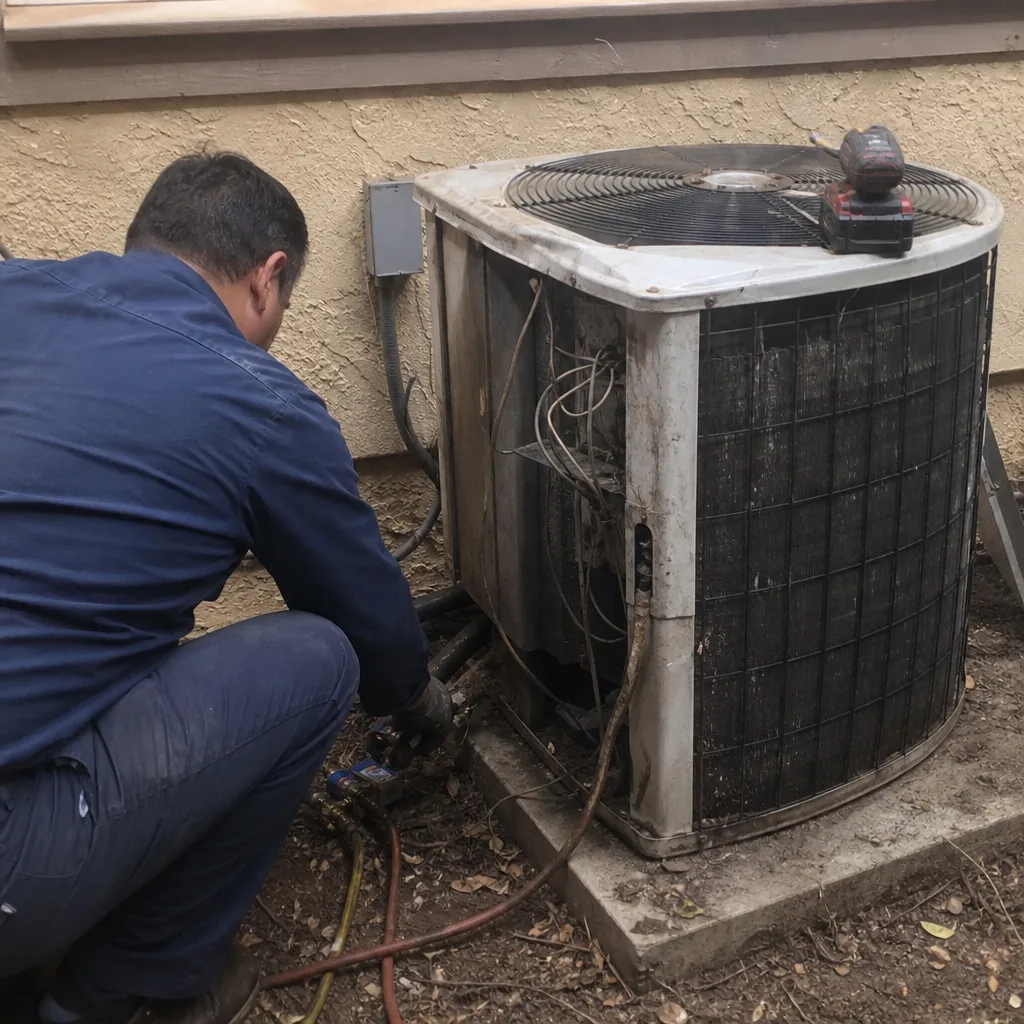 Before
 After
After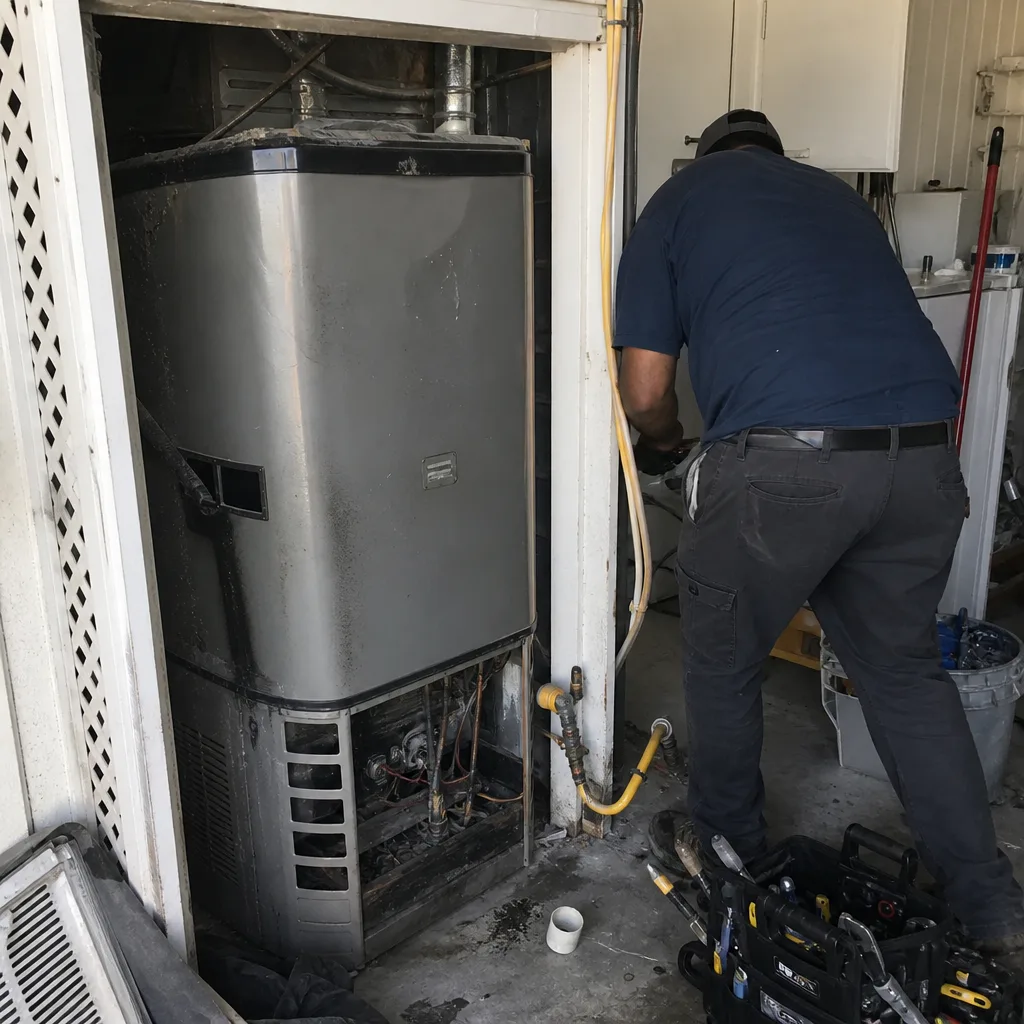 Before
 After
AfterWhen to Call a Professional
Call a professional when the work touches structure, electrical, plumbing, gas, waterproofing, or any system covered by California contractor licensing law. Call a professional when a permit is required and the paperwork matters for resale. Call a professional when the mistake would cost more than the labor you’re saving. And call a professional when the project timeline matters more than the learning curve: a bathroom that’s out of service for six weekends is not a fun DIY story. It’s a daily inconvenience.
If you’re in Woodland Hills and weighing a project, Sawyer Remodel Woodland Hills offers free estimates. A written price before any work starts is part of every project we touch. Call (341) 217-2776 or reach out through our Sawyer Remodel Woodland Hills home page. You’ll get a straight answer, not a sales pitch.
Frequently Asked Questions

Yes, you can legally self-perform non-structural, non-permitted work like painting, flooring, trim, and fixture swaps as long as you own and occupy the home. For structural, electrical, plumbing, or gas work, California law requires either a licensed contractor or an owner-builder permit, and owner-builder work comes with resale disclosure requirements. If you’re not sure which category your project falls into, call (341) 217-2776 and we’ll tell you straight.
The biggest risk isn’t the unfinished project; it’s the unpermitted work that fails later and triggers an insurance denial or a resale price cut. In Woodland Hills, where home values are high and buyers inspect aggressively, unpermitted electrical or plumbing work is a known negotiation lever against the seller. That’s the cost most tutorials never mention.
On simple cosmetic work, DIY saves 50 to 70 percent of the labor cost. On complex work, the math flips: failed DIY jobs in Woodland Hills typically cost 15 to 25 percent more to fix than hiring a professional from the start because the first step is undoing the amateur work. The honest answer: DIY saves on paint and flooring, not on waterproofing, electrical, or structural work.
An owner-builder permit puts you, the homeowner, in the role of general contractor. You’re responsible for the work, the inspections, and the disclosure when you sell. Hiring a general contractor in Woodland Hills means the contractor holds the license, carries the liability, and owns the permit history. For most homeowners, the contractor route is faster and safer. For a small job you know well, the owner-builder path can work. You can see the full range of what a General Contractor in Woodland Hills handles to decide which side of the line you’re on.
It depends on what you’re doing. A cosmetic refresh with cabinet, countertop, and fixture swaps needs no permit. Moving plumbing, adding electrical circuits, or building a new shower pan requires a permit and inspection by the City of Los Angeles. If you’re planning a Bathroom Remodeling in Woodland Hills project and you’re not sure what falls under the permit umbrella, call us. We’ll tell you before you start, not after.
Check three things: a written price before work starts, named material brands (not vague “materials”), and a written warranty that says what happens if the work fails. If a contractor won’t put all three in writing, that’s your sign. For a full home project, look for people who run Home Renovation in Woodland Hills with photo updates, live arrival times, and a phone number that gets answered. That’s the Relay Standard we run every job on.
The Bottom Line
The DIY-versus-hire decision in Woodland Hills is not about your willingness to learn or your handiness. It’s about where the legal line sits, what your insurance policy says about self-performed work, and what a buyer’s inspector will find at resale. Paint the walls yourself. Rip out the old flooring. Swap the faucet. Then, when the job touches waterproofing, structure, gas, or anything with a permit attached, bring in a professional with a written price and a written warranty. The money you spend on licensed labor is cheaper than the liability you inherit from unpermitted work. For more guides & resources on protecting your Woodland Hills home investment, explore our blog. Call (341) 217-2776 for a free estimate on any project and we’ll tell you which side of the line you’re on.
Written by Luca Romano, Owner at Sawyer Remodel Woodland Hills, serving Woodland Hills since 2005.