Last updated October 16, 2026







Free written scope consultation - allowances, timeline, and change-order rules on paper before a single trade is scheduled
Construction Warning Signs: A Woodland Hills Homeowner’s Reference Guide
Here’s a truth most contractors won’t say out loud: the moment a job goes bad is rarely the moment you notice it. It’s usually weeks earlier, sitting quietly in the bid, the contract, or the way a contractor answers a simple question. Homeowners in Woodland Hills call us after the fact all the time, and the stories follow a pattern. This guide breaks down that pattern so you can spot it before a deposit clears, and for more guides & resources you can explore our blog. You’ll learn the specific phrases, pricing behaviors, and paperwork gaps that predict trouble, plus what to do when you see them.
Quick Answer
The most reliable contractor red flags in Woodland Hills are bids priced 30% or more below competing quotes, lump-sum contracts with no line items, any hesitation to show a CSLB license or current insurance certificate, and the phrase “we can skip the permit.” Each of these signals a pattern of behavior that typically leads to cost overruns, abandoned work, or a failed inspection. Document everything, and walk away from any contractor who pressures you to decide before you’ve verified the paperwork.
Styles & brands we work with



Table of Contents
- Pricing Warning Signs in a Woodland Hills Bid
- Licensing and Insurance Tells That End Conversations
- Communication Patterns That Predict a Bad Job
- Permit Avoidance Language and Why It’s a Dealbreaker
- Mid-Project Warning Signs and How to Respond
- How to Document Everything Without Being Difficult
- What a Clean Bid Actually Looks Like Under The Relay Standard
- Common Mistakes to Avoid
Pricing Warning Signs in a Woodland Hills Bid
A low bid feels like a win until you understand what produces it. In Woodland Hills, where labor rates and material costs are fairly consistent across licensed contractors, a bid that comes in 30% or more below everyone else’s is not a bargain. It’s a structural decision. The contractor is cutting something, and you won’t find out what until the job is underway.
The most common things that get cut from a cheap bid:
- Permit fees and inspection costs. These are real line items. If they’re missing, the contractor plans to work unpermitted or ask for them later as a change order.
- Disposal and hauling. Dump fees in Los Angeles County are not trivial. A bid that doesn’t include them means you’ll see a surprise charge mid-project.
- Subcontractor labor. Skilled plumbers and electricians charge real rates. A contractor who plans to use unlicensed labor can quote lower, but the work won’t pass inspection.
- Overhead for insurance and worker’s comp. Uninsured contractors can always underbid insured ones. That’s not a deal. That’s uninsured workers on your property, and in California, the homeowner can be held liable for injuries to uninsured workers.
We’ve walked into homes in Woodland Hills where a previous contractor quoted a full bathroom remodel at half the market rate, then walked off the job after demo. The homeowners were left with a gutted bathroom, no permit, and no recourse through a bond because the contractor wasn’t bonded. The savings vanished the day they had to hire a real contractor to fix the mess.
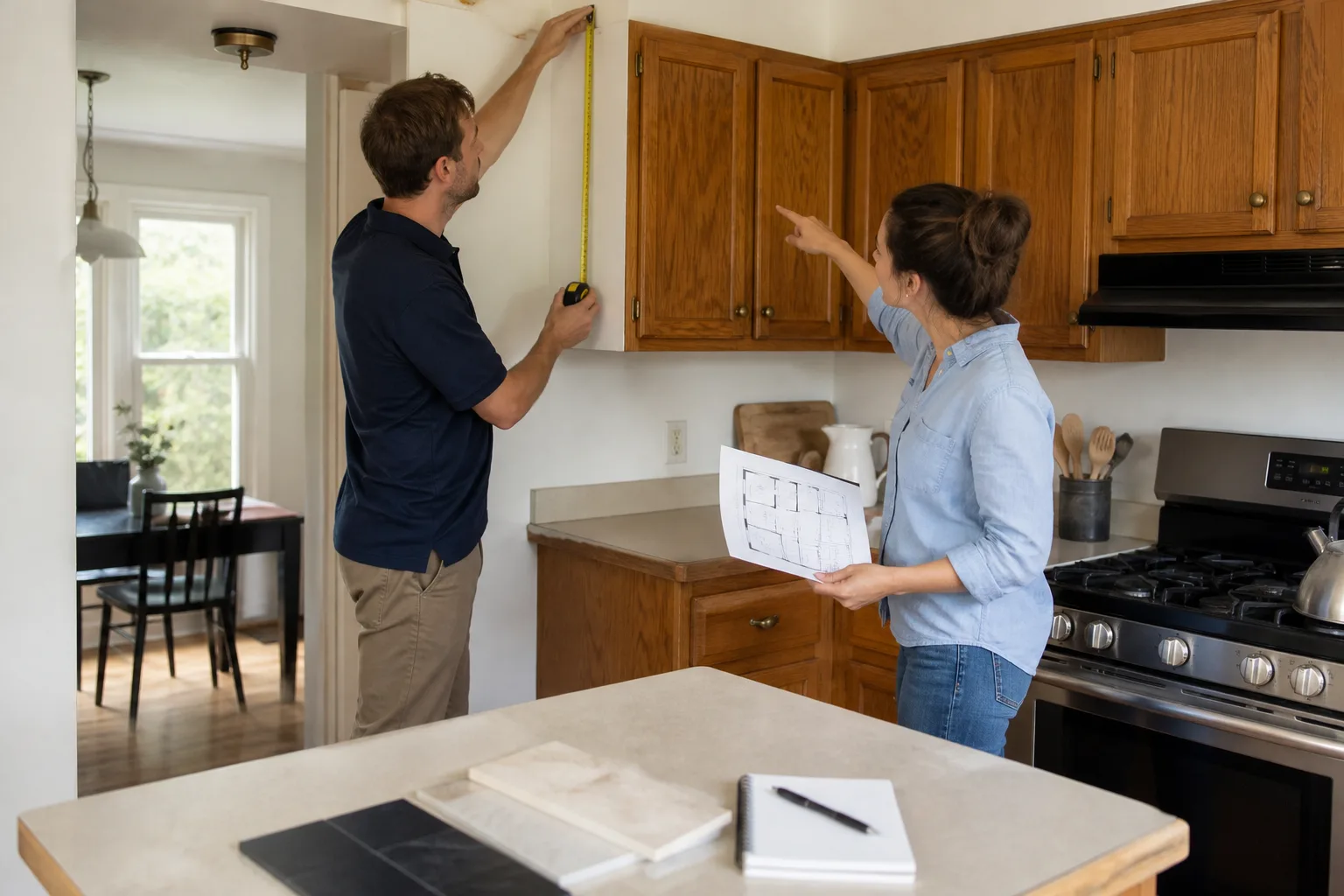
Here’s the plain-language test: ask for the bid in writing, line by line. Material, labor, permits, disposal, fixtures, finish work. Every single bucket gets a number. A legitimate contractor can produce this in a day. A contractor who says “I’ll get you something rough” or “we’ll figure it out as we go” is telling you exactly how the invoicing will go. Sawyer Remodel Woodland Hills puts the written price in your hands before any work starts, because a number you approved is a number we honor.
The “We’ll Figure It Out” Scope
Vague scopes and low prices are the same trick wearing different masks. A scope of work should read like a checklist, not a conversation. If the bid says “remodel bathroom” with no fixture specs, no tile allowance, no waterproofing method, no demo and haul details, then the contractor has given himself permission to define the job as he goes. You’ll pay for that ambiguity.
A legitimate bid for a Woodland Hills bathroom remodel specifies the shower system, the wall substrate, the waterproofing method (a Schluter system, a hot mop, or a foam board), the valve and trim, the vanity, the countertop material, and the finish schedule. It’s specific because the contractor has actually thought through the job. The more detail in the bid, the fewer change orders later.
Licensing and Insurance Tells That End Conversations
In California, any contractor performing work over $500 in labor and materials must hold a valid contractor’s license from the Contractors State License Board (CSLB). That’s state law, not a preference. The CSLB number belongs on every business card, every truck, every bid, and every contract. If a contractor hesitates when you ask for it, that’s the red flag.
Here’s the thing that surprises people: producing a CSLB number is not the same as being licensed. Some unlicensed operators borrow or fake numbers. The test is the CSLB website. Look up the number. Confirm the name matches the person you’re talking to. Confirm the license is active and not suspended. Confirm the classification matches the work (a “C-54” tile license doesn’t authorize a whole-home remodel). It takes five minutes on a phone, and it’s the cheapest insurance you’ll ever buy.
Insurance is equally unforgiving. Ask for a certificate of insurance directly from the carrier, not a photocopy from the contractor. Check two things:
- The dates. Is the policy period current? A certificate that expired last month means the contractor may have let coverage lapse. If you can’t get a current certificate, end the conversation.
- The coverage types. At minimum, you want general liability. For jobs with employees or subs, you want workers’ compensation listed. If a roofer is on your roof without workers’ comp and falls, your homeowners insurance may not cover the claim.
We’re a General Contractor in Woodland Hills and we carry our paperwork the way we carry our tools: immediately available, no waiting. Ask us for a license check or a certificate of insurance and we’ll send it while you’re still on the phone. Any contractor who treats this like an inconvenience is telling you how they’ll treat the hard questions later.
Communication Patterns That Predict a Bad Job
Contractors don’t become ghosts at the end of a job. They practice being ghosts at the beginning. The way a contractor communicates during the bid phase is a preview of his communication during the build. Watch the patterns.
Slow bid response. Woodland Hills homeowners are busy. A contractor who takes two weeks to return a bid, misses his own promised deadline, or needs three follow-up texts has already shown you his operational tempo. A remodeling job has hundreds of decisions. If the simple ones move this slowly, the complex ones won’t move at all.
Vague answers about subcontractors. Ask directly: “Who will be doing the plumbing on this job?” and “Will you have your own crew or subs?” A licensed contractor typically uses a mix. The names may change between bid and build, but the answer should be specific, not “oh, I have guys.” When we tell you a background-checked, uniformed technician is coming to your home, you know their name before they arrive. That’s part of The Relay Visibility Guarantee at Sawyer Remodel Woodland Hills, and it should be standard for anyone who walks through your door.
No written schedule. A remodeling project is a sequence of dependent steps: demo, rough plumbing, rough electrical, inspection, drywall, tile, finish. A contractor who can’t put that sequence on paper with approximate dates is planning to improvise. Improvised schedules are how a four-week bathroom remodel becomes a four-month open wound in your house. Ask for a written schedule before work starts. You don’t need it down to the hour, but you need the sequence and the milestones. If they can’t produce one, they don’t have one.
Permit Avoidance Language and Why It’s a Dealbreaker
The phrase that should end any contractor conversation in Woodland Hills: “We can skip the permit and save you money.” There is no version of that sentence that benefits the homeowner. Here’s what that sentence actually means:
A permit connects your project to the building department’s inspection process. It means a city inspector reviews the work at key stages: rough plumbing, rough electrical, structural changes. That inspection is the only independent verification that the work meets current code. When a contractor offers to skip it, he’s not saving you the $500 to $2,000 permit fee. He’s choosing to work without the one person who can catch his mistakes.
The consequences of unpermitted work in Los Angeles County are real and compounding:
- When you sell the house, the unpermitted work is discovered in the disclosure process. Buyers negotiate down, or the lender refuses to fund. You eat the cost either way.
- Your homeowners insurance policy likely contains an exclusion for damage caused by unpermitted work. If a shower pan fails and floods your downstairs, and there was no permit, the claim can be denied.
- If the work is unsafe, the city can issue a stop-work order or require you to correct it at your own expense, sometimes by tearing it out and doing it again.
We pull permits on every job that requires them in Woodland Hills. We schedule the inspections, we stand for them, and we don’t consider the job done until it passes. A permit is not an inconvenience. It’s the paper trail that proves the work was done right. Any contractor who frames it as optional is not a contractor you want in your walls.
Mid-Project Warning Signs and How to Respond
By now you know the pattern: the problems that show up mid-project are the same behaviors that were visible in the bid phase, just louder. Here’s what to watch for once work begins, and what to do when you see it.
Sudden change order pressure. A change order is a written amendment to the contract that changes the scope or price. Some change orders are legitimate: you decide to add a niche in the shower, or the electrician finds a panel that isn’t up to code. What’s not legitimate is a contractor who discovers, every single week, that something “wasn’t in the original bid.” A few change orders happen. A pattern of them is a pricing strategy. The response: refuse verbal change orders. Everything in writing, with a price, before the work changes. If the contractor refuses, document it and prepare to stop work.
Material swaps without notice. You specified Kohler fixtures and a Cambria countertop. The contractor installs a no-name valve and a stone that “looks the same.” This is not a small thing. The materials you chose were priced into the bid. The contractor is capturing margin by substituting cheaper product and hoping you won’t check. Check everything against the written spec. If a swap happens without your written approval, stop work and require the correct material or a written credit in the amount of the price difference.
Crews showing up on no schedule. Your bathroom is demoed, and then nobody shows for a week. The contractor doesn’t answer texts. This is the vanish, and it’s the most reported contractor complaint in the Los Angeles area. The response is documentation: every unanswered text, every missed date, every promised call that didn’t come. In California, if a contractor abandons a project without good cause, you have legal remedies, but they’re easier to pursue when you’ve documented the pattern.
At Sawyer Remodel Woodland Hills, these specific failures are why we built The Relay Visibility Guarantee: a live arrival time, photo updates before and after, and a written price before a single tool is picked up. When the process is visible, the surprises don’t have anywhere to hide.
How to Document Everything Without Being Difficult
You don’t need to become a hostile project manager to protect yourself. You need three simple habits. Together they create a paper trail that makes you impossible to take advantage of.
- Keep every bid in writing, including each revision. Text messages and emails count as written records in California. If a contractor gives you a verbal quote, follow up with a text: “Just confirming you said $12,500 for the bathroom remodel, including the Kohler fixtures, correct?” His response, or lack of one, is your record.
- Photograph everything at every stage. The day before demo. The day after demo. The day the plumbing goes in. The day the tile goes up. You don’t need to narrate it, just timestamp it. These photos are your evidence if there’s a dispute about what was there, what was promised, or what was done.
- Put every change in writing before it happens. Never, ever approve a change verbally. Not one. Not even a small one. “Sure, go ahead and add that outlet” is how a $200 outlet becomes an $800 line item. The discipline is simple: if it changes the price, it changes the paper.
Good contractors won’t resist any of this. The ones who roll their eyes, call you difficult, or tell you “we don’t really do contracts like that” are telling you they need ambiguity to operate. You should not give it to them.
What a Clean Bid Actually Looks Like Under The Relay Standard
We’ve spent a lot of words on what’s wrong. Here’s what right looks like, specifically, from a contractor’s side of the table. This is what we do at Sawyer Remodel Woodland Hills, and it’s what you should demand from anyone.
A clean bid arrives within a day or two. It starts with a written price, line by line: demolition, structural work, plumbing, electrical, waterproofing, tile, fixtures, countertops, paint, permit fees, disposal. Each line has a dollar amount. The total is the total. If you approve it, that’s the number on the invoice. Our no-hassle upfront pricing means a written price lands in your hands before any work starts, so the number on the invoice is the number you approved.
A clean bid also includes a written schedule: demo starts on this date, rough plumbing this week, inspection this day, tile this period, final walkthrough this date. We don’t always hit every date exactly, and no honest contractor promises we will. But the sequence is on paper, and you can see where the job is.
Finally, a clean bid comes with a written guarantee. Ours is the 365-Day Done Right Promise: if it’s not done right, we make it right, backed in writing on every project. Not a verbal “don’t worry, we’ll take care of you.” In writing. With a scope. And a free second visit if a repair fails. That’s what accountability looks like, and it’s the thing you’re actually shopping for when you compare contractors.
For materials, a clean bid names the brands: cabinets from KraftMaid or Wellborn, countertops from Cambria or Silestone, fixtures from Kohler. Not “quality materials” or “top-tier finishes.” If the bid doesn’t name brands, the contractor is reserving the right to choose cheaper ones. We name ours because we want you to price-check us. We’re confident in what we install. Visit our Bathroom Remodeling in Woodland Hills page to see how the material selections get specified in a real scope of work, and our Home Renovation in Woodland Hills page for how the same standard applies to larger projects.
Common Mistakes to Avoid
- Taking the lowest bid without comparing line items. A low bid is not a discount. It’s a scope cut. In Woodland Hills, a bathroom remodel that’s $8,000 under the nearest competitor is missing something specific. Find out what.
- Paying a large deposit before the contract is signed. California law limits the down payment a contractor can request to 10% of the project total or $1,000, whichever is less. Anyone asking for more before work begins is breaking state law.
- Letting the contractor “handle the permit.” Fine, as long as the permit is actually pulled and you see the permit number. Verify it with the city. Do not take his word. Pulling the permit is the contractor’s responsibility, but confirming it is yours.
- Writing the final check before the final inspection passes. The final lien release and the passed inspection are the two things that release you from the project. Never pay the final draw without both.
- Ignoring your gut because the contractor is charming. Charm is a sales skill. It tells you nothing about the plumbing. The paperwork tells you about the plumbing. Trust the paperwork.
- Hiring a contractor who won’t answer calls during the bid phase. If he’s hard to reach when he’s trying to win your business, he’ll be impossible to reach when he already has your money.
See the difference
 Before
 After
After Before
 After
After Before
 After
AfterWhen to Call a Professional

There’s a pattern to the calls we get in Woodland Hills. Some homeowners call us at the bid phase, comparing quotes and asking us to explain what’s in ours. Others call us after the fact, when a low bid has turned into a half-finished bathroom and a contractor who stopped answering the phone. Both are fixable. The second one costs more.
The time to bring in a professional is before the deposit clears. If a bid seems too low, if the license number doesn’t check out, if the permit talk feels evasive, if the contract is vague, call us. Sawyer Remodel Woodland Hills offers free estimates in Woodland Hills, so you can compare our bid against anyone else’s without spending a dollar. Call (341) 217-2776 and we’ll walk you through what a line-item bid should include, ours or theirs.
Frequently Asked Questions
The biggest red flag is a lump-sum bid with no line items, because it hides what the contractor is actually charging for and gives him room to swap materials or cut scope without your knowledge. Call (341) 217-2776 if you want a real breakdown from Sawyer Remodel Woodland Hills.
California law caps the down payment at 10% of the contract price or $1,000, whichever is less. Any request for more is a legal violation and grounds to walk away.
Yes. Go to the CSLB website, enter the license number, and confirm the name, classification, and status match the person and the work. It takes five minutes and costs nothing.
Unpermitted work can trigger denied insurance claims, lower resale value with disclosure problems, and city orders to tear out and redo the work. The $500 to $2,000 you save on permit fees becomes far more expensive when the work fails or the house sells.
Written approval first, always. If the swap is a downgrade, you’re owed the price difference as a written credit. If it’s an upgrade, get the new cost in writing before any work changes. No verbal material approvals, ever.
Ask for a written schedule and watch how the contractor communicates in the bid phase. Contractors who give live arrival times, like the ones at Sawyer Remodel Woodland Hills, are building a process around showing up. Contractors who already miss bid-phase calls will miss build-phase dates.
The Bottom Line

Contractor red flags hide in the paperwork, not in the handshake. A bid that’s suspiciously low, a license number that doesn’t check out, a contractor who wants to skip the permit, a contract with no line items: these are the warnings that cost Woodland Hills homeowners months and thousands of dollars when ignored. The protection is documentation and the discipline to walk away from patterns you’d recognize in any other business. The contractor you want puts the price in writing, shows you the license on request, builds a schedule, and stands behind the work in black and white. That’s a standard, not a favor. Demand it.
Written by Luca Romano, Owner at Sawyer Remodel Woodland Hills, serving Woodland Hills since 2005.