Last updated October 16, 2026








Free written scope consultation - allowances, timeline, and change-order rules on paper before a single trade is scheduled
General Contractor Maintenance Checklist for Woodland Hills Homeowners
A wood-framed Woodland Hills home built in the 1970s expands and contracts by as much as an inch seasonally. The temperature swings between August afternoons and January nights pull at every caulk joint, every stucco seam, every piece of fascia board. Most homeowners find out what that movement does only after water is already inside. This guide covers the checks that actually matter for your specific house, in your specific climate, and what a general contractor looks at before problems become invoices.
Quick Answer
A Woodland Hills home maintenance checklist should prioritize stucco crack triage, Santa Ana wind damage to roof vent screens and fences, HVAC duct inspection on 1970s-1980s era systems, drought-stress foundation drainage checks, and seasonal caulk and sealant replacement. Most homeowners can handle about 60% of these checks themselves. The remaining 40% involves ladders, crawlspaces, or liability that belongs with a licensed general contractor.
Styles & brands we work with







Table of Contents
- Stucco Crack Triage: Which Cracks Signal Real Moisture Intrusion
- Santa Ana Wind Checks Homeowners Usually Miss
- Drought-Stress Landscaping and Foundation Drainage
- HVAC and Duct Inspection for 1970s-1980s Homes
- Seasonal Caulk and Sealant: The Inch Problem
- Licensed GC vs. Handyman: The Liability Line
- Common Mistakes to Avoid
- When to Call a Professional
- Frequently Asked Questions
Stucco Crack Triage: Which Cracks Signal Real Moisture Intrusion
Stucco cracks in Woodland Hills fall into two categories: hairline cracks under 1/16 inch that follow the natural expansion cycle, and structural cracks over 1/8 inch that indicate movement or water damage. Hairline cracks around window corners and door frames are normal on Valley-era homes. They open slightly during summer heat and close during winter. You can monitor these with a pencil mark at the crack’s end and check it every few months. If the mark stays put through a full season, the crack is cosmetic.
Cracks wider than 1/8 inch tell a different story. We’ve seen stucco cracks on the south-facing walls of homes near Topanga Canyon Boulevard that had water behind them for years before anyone noticed. The sun bakes that side of the house, the stucco expands, the crack widens, and Santa Ana rains drive water straight in. Once water gets behind stucco, it travels down the wall cavity and pools at the bottom plate. That’s where rot starts. That’s where termites follow.
Here’s the triage list we use when evaluating stucco cracks during a General Contractor in Woodland Hills inspection:
- Hairline, under 1/16 inch, no staining: Monitor seasonally. Seal with elastomeric caulk if you want to be thorough.
- Hairline with brown staining below: Water is already getting through. Seal and watch for interior signs.
- 1/8 inch or wider, vertical or diagonal: This is structural movement. A general contractor needs to determine if it’s settling or moisture-related expansion.
- Stair-step cracks following mortar lines: Foundation movement. Do not caulk and ignore this.
- Bulging or soft stucco when pressed: Water damage behind the surface. This is a repair now situation, not a monitoring one.
Stucco on homes built before 1980 in Woodland Hills usually sits directly on wood framing with building paper behind it. Once that paper fails, you have a slow leak that never dries. The fix is not more caulk. The fix is removing the damaged section, repairing the paper, and re-stuccoing with proper flashing. A handyman with a caulk gun cannot solve this. A Home Renovation in Woodland Hills contractor can.
Santa Ana Wind Checks Homeowners Usually Miss
Santa Ana winds hit Woodland Hills hard because of the topography. The winds funnel through the Santa Monica Mountains and accelerate into the Valley. Your house takes that force three or four times a year, sometimes for days at a time. Most homeowners know to check for fallen branches. Few check the things that fail silently.
Roof vent screens are the first thing we check after a strong Santa Ana event. The wind pushes debris, leaves, and sometimes embers into attic vents. A clogged vent screen traps heat and moisture in the attic. That shortens the life of your roof decking and runs up your cooling bill. Remove the screen and clear it. If the screen is torn, replace it before the next wind event. The cost is about $15 per vent. The cost of ignoring it is a hot attic in August and possible moisture issues in winter.
Attic insulation displacement is the sleeper issue. Santa Ana winds create negative pressure across your roof. That pressure pulls air through any gap in the eaves or venting. Over repeated wind events, loose-fill insulation shifts, leaving bare spots over living areas. Walk your attic after major wind events. Look for insulation piled against one wall and thin over bedrooms. A contractor with a thermal camera can spot these bare spots from inside the house in minutes.
Fence post integrity is the check nobody thinks about until the fence is horizontal. Wood posts set in concrete hold against downward force well. They resist lateral force poorly. Years of Santa Ana shaking loosens the post-to-concrete bond. Grab each post and push hard. Movement means the post needs resetting or bracing. Woodland Hills backyards with exposure to the open Valley floor take this harder than hillside lots. Replace loose posts before the next wind season or you’ll lose the whole panel, not just the post.
- Check roof vent screens after every Santa Ana wind event lasting more than 24 hours.
- Walk the attic boundary and check for insulation displacement before summer and after fall winds.
- Push-test every fence post, especially corner posts and gate posts.
- Check rain gutter brackets. Santa Ana vibration loosens the lag screws over time.
- Inspect attic access hatches. Wind pressure can pop them slightly open, letting conditioned air escape.
Drought-Stress Landscaping and Foundation Drainage
Woodland Hills has been through multiple drought cycles in the last 15 years. The effect on foundations is specific and often ignored. When soil dries out completely, it contracts. Clay-heavy soil, which much of the Valley has, contracts significantly. That contraction pulls soil away from foundation walls. When rain finally comes, the soil expands rapidly. Repeat this cycle enough times and you get foundation movement, cracks in slab floors, and doors that suddenly stick.
What should a homeowner tell a contractor to look for? First, check the soil line around the foundation perimeter. If you can see a gap between the soil and the foundation edge, that’s drought contraction. Second, look at hardscape. Concrete walkways that have pulled away from the house by more than half an inch indicate soil movement. Third, check interior slab cracks. Hairline cracks that appear suddenly after a rain event following a long dry period are the classic drought-cycle signature.
Drainage is the other half. During drought, homeowners stop irrigating. Plants die. Roots shrink and leave channels in the soil. When heavy rain comes, water follows those channels straight to the foundation instead of running away from the house. A landscaping and drainage check should be part of every Woodland Hills maintenance schedule.
- Verify gutters drain at least four feet from the foundation, not into planting beds adjacent to the house.
- Check that soil slopes away from the foundation at least six inches over ten feet.
- Look for mushy spots or sinking in the yard after rain, especially near former tree locations.
- Confirm downspout extensions are in place and not crushed or buried under mulch.
- Consider rain sensors or smart irrigation controllers to maintain consistent soil moisture, even during water restrictions.
Foundation movement from drought cycling is a general contractor issue, not a landscaper issue. The fix often involves grading, drainage correction, and sometimes foundation pinning. Get a licensed General Contractor in Woodland Hills involved before you spend money on landscaping that will get torn out anyway.
HVAC and Duct Inspection for 1970s-1980s Homes
A large share of Woodland Hills housing stock dates to the 1960s through 1980s. These homes were built with galvanized steel duct systems that are now 40 to 60 years old. The ducts leak. The insulation around them has degraded. The joints have separated. The average duct system in a home of this vintage loses 20 to 30 percent of conditioned air before it reaches the register. That means you’re paying to heat and cool your attic or crawlspace.
Inspection cadence matters here. We recommend a full duct inspection every three years for homes with original ductwork. Between inspections, do these checks yourself. Look at visible ducts in the attic or crawlspace. Check for separated joints, visible gaps, crushed sections, or duct tape peeling away. Duct tape, despite the name, is not a duct sealing product. It dries out and falls off within a few years. Proper duct sealing uses mastic or foil tape designed for HVAC.
One Woodland Hills specific issue: rodent activity in attic ductwork increases during drought years. Animals looking for water chew through duct insulation and sometimes the ducts themselves. If you hear scratching in the attic or see droppings near the air handler, have the ducts inspected. Rodent-damaged ducts leak significantly and can circulate contaminated air through the house.
- Change filters every 30 to 90 days depending on pets and air quality. Smoke season means more frequent changes.
- Check visible duct joints for separation before cooling season in spring and before heating season in fall.
- If rooms at the end of runs are noticeably warmer or cooler, suspect duct leakage, not a failing HVAC unit.
- Schedule a professional duct inspection every three years on original systems.
- Consider duct replacement or sealing if your energy bills climb steadily without a change in usage patterns.
Seasonal Caulk and Sealant: The Inch Problem
Back to that inch of seasonal movement. Caulk is the sacrificial layer. It stretches, cracks, and eventually fails. In Woodland Hills, the failure pattern is predictable. South and west-facing joints fail first because they take the most thermal cycling. Joints around windows, doors, and trim on those exposures need replacement every three to five years. North and east-facing joints can go seven to ten years.
The failure mode matters. Caulk fails in two ways: adhesive failure, where it pulls away from one surface, and cohesive failure, where it tears down the middle. Adhesive failure means the surface wasn’t clean when the caulk was applied, or the wrong caulk was used. Cohesive failure means the joint moved more than the caulk could accommodate. In Woodland Hills, cohesive failure on south-facing joints is the norm. The fix is a higher-movement caulk, usually an elastomeric or silicone-based product rated for 50 percent joint movement.
- Inspect caulk joints on south and west exposures every spring.
- Remove and replace any caulk showing cracks, pulling away, or tearing in the center.
- Use paintable silicone or elastomeric caulk rated for exterior use on stucco joints.
- Check the joint where the wall meets the roofline. This is the number one water entry point on Valley-era homes.
- Caulk is not a structural fix. If a gap is wider than 1/4 inch, the underlying issue is movement and needs a contractor’s evaluation.
This is the maintenance item that saves the most money per dollar spent. A tube of quality caulk costs $8 to $15. A water damage repair from failed caulk around a window runs $2,000 to $8,000 depending on what got wet. The math is not complicated.
Licensed GC vs. Handyman: The Liability Line
California law draws a bright line: any project over $500 in labor and materials requires a contractor’s license. That’s not a guideline. That’s Business and Professions Code 7048. A handyman working above that limit without a license is breaking the law, and the homeowner carries the liability if something goes wrong. We have homeowners come to us after a handyman project went sideways and their insurance claim was denied because the work was performed by an unlicensed individual. The denial is legal and final.
So where’s the line practically? Cosmetic work, paint touch-up, replacing a faucet, swapping a light fixture, and minor drywall patches are handyman territory. Anything involving structural changes, plumbing renovations, electrical panel work, stucco repair, roofing, or foundation work belongs with a licensed general contractor. In Woodland Hills, you have the added layer of hillside construction requirements. Some areas near the Santa Monica Mountains require soils reports, grading plans, and specific structural engineering for work that would be simple on flat ground.
When you hire a licensed general contractor, you’re buying three things: the license means the state has verified minimum competency and requires continuing education. The bond means you have recourse if the contractor fails to perform. The insurance means you’re not personally liable if a worker gets injured on your property. None of those exist with a handyman. The savings evaporate the first time something goes wrong.
For larger maintenance-derived projects, like fixing water damage from failed caulk or replacing a stucco wall section, a Bathroom Remodeling in Woodland Hills contractor or general remodeler has the licensing and insurance to do it right.
Common Mistakes to Avoid
- Painting over stucco cracks without sealing them first. Paint hides the crack for a season. It doesn’t stop water. The crack reopens and the water damage continues behind the paint film.
- Ignoring a sticking door as a humidity issue. In Woodland Hills, sticking doors after rain events usually mean foundation movement, not seasonal swelling. A door that sticks and then unsticks is a warning sign.
- Using interior caulk on exterior joints. Interior caulk lacks UV resistance and the movement capability for exterior thermal cycling. It fails within months on south-facing walls.
- Assuming a roof leak is the roof’s fault. Many Woodland Hills “roof leaks” are actually failed wall-to-roof flashing or stucco cracks above the ceiling line. Re-roofing won’t fix a stucco problem.
- Waiting until winter to check drainage. By the time winter rains arrive, the soil is saturated and drainage problems are visible everywhere. Check drainage in September, when you can still fix things before the rain.
- Treating Santa Ana damage as a one-time event. The winds come back every year. A repair that doesn’t account for repeated wind loading will fail again. Build back with wind-resistant details.
- Hiring by price alone on maintenance-derived repairs. The lowest bid on a stucco repair or drainage fix usually means someone is skipping substrate preparation, permits, or both. You’ll pay again in two years.
When to Call a Professional
Call a licensed general contractor in Woodland Hills when you see stucco cracks over 1/8 inch, especially with staining or bulging. Call when you find water in the attic or crawlspace that you can’t trace. Call when doors and windows suddenly stick after rain. Call before you spend serious money on drainage or foundation-adjacent work, so you’re not paying twice. Call when any repair involves structural elements, permits, or work that will be covered by your homeowner’s insurance. Sawyers Remodel Woodland Hills offers free estimates in Woodland Hills. Call (341) 217-2776 and we’ll look at what you’re seeing, explain what it means, and give you a written price before any work starts.
Frequently Asked Questions
Most licensed general contractors offer a basic maintenance inspection for free or a nominal fee, especially if the inspection is part of a potential repair project. A comprehensive whole-home inspection by a licensed general contractor in Woodland Hills typically runs $300 to $600 depending on home size and scope. Call (341) 217-2776 for an exact quote on your specific home.
Inspect stucco twice a year, in spring after winter rains and in fall before rains return. South and west-facing walls need closer attention because they take the most thermal cycling. Look specifically for cracks over 1/8 inch, staining below cracks, and any soft or bulging areas.
Failed caulk and sealant around windows, doors, and wall-to-roof intersections is the most expensive problem to ignore. Water entry through these joints causes rot, mold, and termite damage behind stucco, and repairs routinely run $2,000 to $8,000. The caulk fix costs under $50.
Small cosmetic patching under a few square feet typically doesn’t require a permit. Larger stucco removal and replacement, especially anything involving the building paper or structural framing, requires a permit through the Los Angeles Department of Building and Safety. A licensed general contractor handles this process for you.
Yes for visual checks like caulk condition, fence post movement, and visible duct separation. No for anything requiring a ladder over one story, attic access with electrical hazards, or interpreting structural cracks. Know your limits. The point of a checklist is knowing what you can see and what a professional needs to evaluate.
Small stucco repairs take one to two days including drying time between coats. Larger repairs involving building paper replacement and multiple coats can take three to five days. The full drying and curing process before painting adds another week. We’ll give you a timeline in writing before work starts.
The Bottom Line

Woodland Hills homes fail in predictable ways driven by heat cycling, Santa Ana winds, drought-stressed soil, and aging building systems from the Valley’s biggest construction era. The fixes that prevent the most damage are also the cheapest: caulk, vent screens, drainage checks, and honest visual inspections done on schedule. The fixes that cost the most are the ones deferred until water is inside the house. Use this checklist twice a year. Handle what you can. Call a licensed Sawyer Remodel Woodland Hills home contractor for what you can’t. Your house is talking. Listen before it starts screaming.
Written by Luca Romano, Owner at Sawyer Remodel Woodland Hills, serving Woodland Hills since 2005.
See the difference
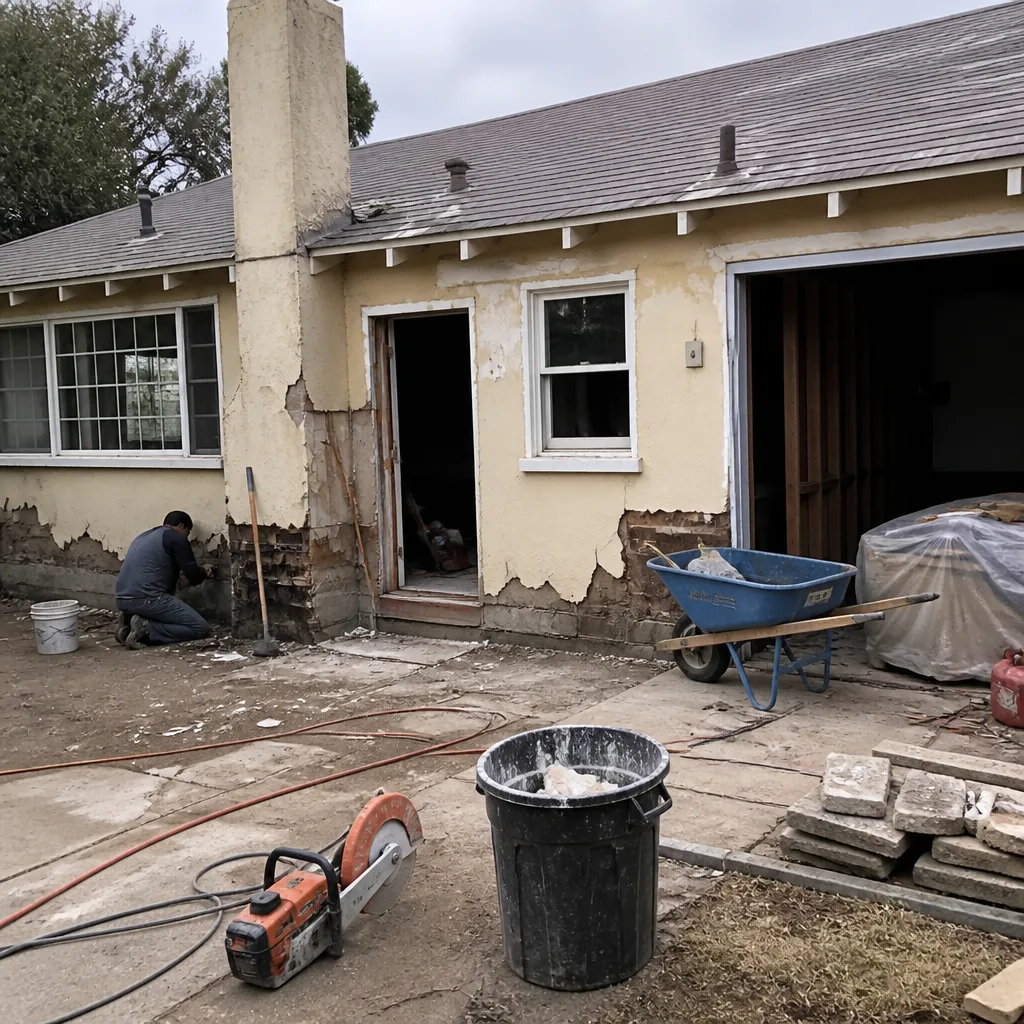 Before
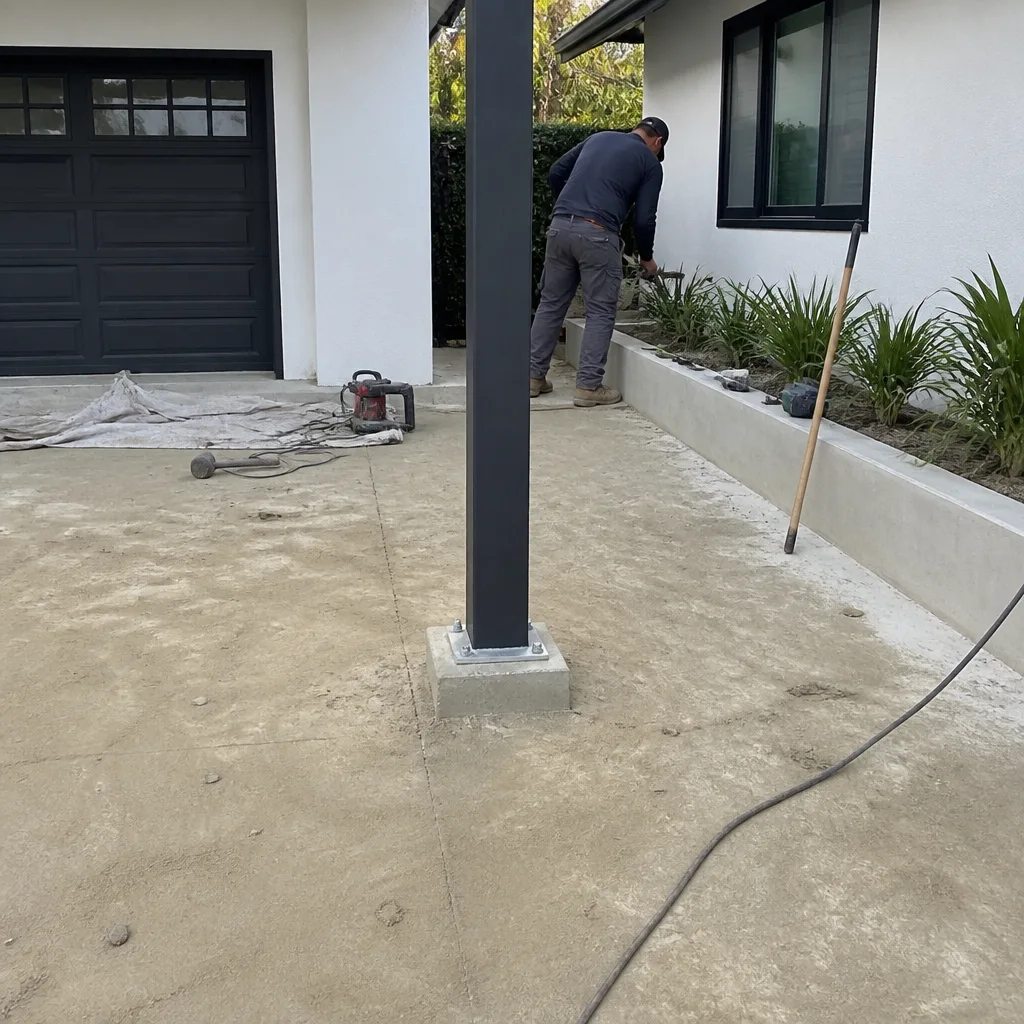 After
After Before
 After
After Before
 After
After